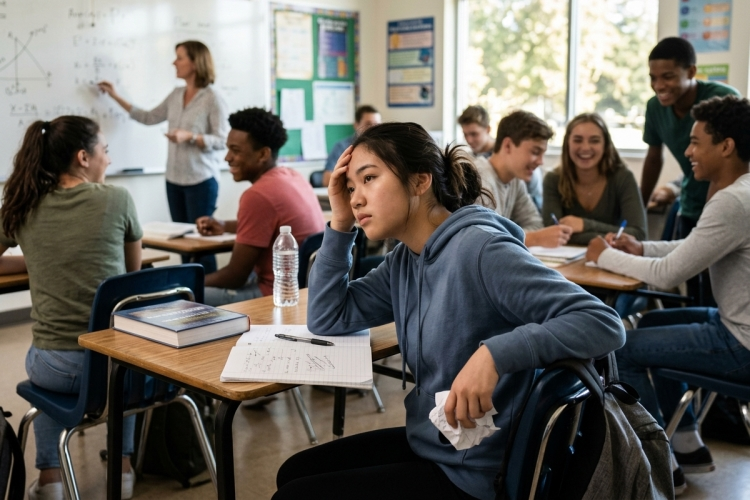
A student may be physically present in class while their mind is somewhere else. They could be worried about bullying, exhausted from poor sleep, hungry, anxious about an exam, or convinced that nobody at school cares about them.
In that situation, even an excellent lesson may struggle to reach them.
This is why student well-being matters for learning. Well-being affects how learners concentrate, remember information, manage frustration, build relationships, and participate in classroom activities.
It includes mental and emotional health, physical wellness, safety, belonging, social connection, and confidence about the future. Supporting well-being does not mean removing every challenge or making school easy.
Students still need demanding tasks, clear expectations, and opportunities to learn from mistakes. However, productive challenge is different from constant fear, exhaustion, isolation, or overwhelming pressure.
The OECD treats student well-being as an important educational outcome because learners are more than their grades. How they manage stress, relationships, health, and school life can influence both academic performance and their longer-term development.
What Does Student Well-Being Mean?
Student well-being describes how learners experience their physical, emotional, social, and educational lives. It is not simply the absence of a diagnosed mental health condition.
A student with positive well-being generally feels reasonably safe, supported, connected, and capable of dealing with ordinary challenges. They have opportunities to rest, participate, build relationships, and ask for help when something becomes difficult.
Well-being can change over time. A confident learner may struggle after moving schools, experiencing family problems, becoming ill, or facing repeated academic failure.
It is also influenced by the learning environment. Classroom relationships, assessment pressure, school rules, discrimination, facilities, workload, and access to support can all shape how students feel.
WHO describes a health-promoting school as one that continually strengthens its capacity to be a healthy place for living, learning, and working. This includes physical health, nutrition, recreation, counselling, social support, and mental health promotion.
Well-Being Affects Attention and Memory
Learning requires mental resources. Students must focus on information, connect it with prior knowledge, hold ideas in working memory, and retrieve them later.
Stress can temporarily sharpen attention when a challenge feels manageable. A little nervousness before a presentation may encourage a student to prepare carefully.
However, constant or overwhelming stress can make concentration much harder. A learner who is worried about safety, family conflict, or public humiliation may remain alert to possible threats instead of focusing on the lesson.
Imagine trying to understand algebra while repeatedly wondering whether classmates will laugh when you answer. The brain is receiving the teacher’s explanation, but part of its attention is being used to monitor social danger.
Poor well-being may also reduce persistence. When students feel emotionally exhausted, ordinary mistakes can seem like proof that they are incapable rather than a normal part of learning.
Supporting mental health does not guarantee high grades, but it creates better conditions for attention, memory, decision-making, and problem-solving.
WHO’s education-sector guidance recommends safe and inclusive learning environments, manageable academic pressures, mental health education, and access to psychosocial support.
Safety and Belonging Improve Engagement
Students are more likely to participate when they feel accepted by teachers and classmates. This sense of connection is often called school belonging or school connectedness.
Connected students believe that people at school care about them as individuals and about their learning. They are more comfortable asking questions, joining activities, and seeking help after a setback.
Safety is an essential part of this experience. Bullying, harassment, discrimination, aggressive discipline, or unpredictable classroom behaviour can make students withdraw from school life.
PISA 2022 found that students who reported feeling safer at school generally performed better and experienced stronger well-being. Across OECD countries, feeling safe was positively related to belonging and life satisfaction and negatively related to mathematics anxiety.
These findings show associations rather than proving that safety alone causes achievement, but the relationship is still educationally important.
Teachers can strengthen belonging through respectful communication, predictable routines, fair rules, and genuine interest in students’ ideas. Small actions-learning names, listening without ridicule, and checking on an unusually quiet learner-can make a classroom feel more human.
Physical Health Supports Academic Learning
Student well-being includes the body as well as the mind. Sleep, nutrition, movement, illness, pain, and access to clean water can all affect classroom performance.
A tired student may struggle to control attention, follow instructions, or remember new material. Hunger can make it difficult to concentrate, while untreated vision or hearing problems may appear to be a lack of effort.
Physical activity can support health, social interaction, and readiness to learn. It should not be treated as wasted academic time or used only as a reward for finishing “real” work.
Schools cannot control every part of a student’s lifestyle, but they can create healthier conditions. Suitable breaks, safe drinking water, clean facilities, school meals, physical education, and access to health services can all support learning.
WHO has long recognised the close link between health and education, noting that schools can play a central role in protecting the well-being of children and adolescents.
Emotional Well-Being Builds Motivation and Resilience
Motivation is not simply a personality trait that some students have and others lack. It is influenced by whether learners expect effort to lead to progress.
Students become more willing to attempt difficult work when goals are clear, feedback is useful, and mistakes are treated as information rather than humiliation.
This is where emotional well-being supports resilience. Resilience does not mean ignoring stress or remaining cheerful during every difficulty. It means being able to recover, adapt, seek support, and continue moving forward.
Teachers can develop this capacity by dividing complex tasks into manageable stages and recognising genuine improvement. Feedback such as “Your evidence is stronger; now explain how it supports your argument” gives the learner a realistic next step.
Extreme pressure can have the opposite effect. When every task feels like a judgment of intelligence or personal worth, students may avoid risks, hide confusion, or cheat to protect themselves.
UNICEF recommends education systems that promote mental health, strengthen supportive relationships, reduce harmful pressures, and provide suitable care for learners and the adults around them.
Healthy Relationships Make Help Easier to Seek
Students do not always announce when they are struggling. Changes may appear through repeated absence, unfinished work, irritability, isolation, sudden drops in performance, or unusually risky behaviour.
These signs do not reveal one certain cause. A student who stops completing assignments could be confused by the subject, experiencing problems at home, working long hours, being bullied, or dealing with a health issue.
Teachers should avoid diagnosing students based on limited observations. Their role is to notice meaningful changes, listen appropriately, follow safeguarding procedures, and connect learners with qualified support when necessary.
Trusted relationships make this process easier. A student is more likely to describe a problem when previous conversations have shown that an adult will respond calmly and respectfully.
CDC guidance describes school connectedness as a protective factor associated with positive health and educational outcomes. It encourages schools to strengthen supportive relationships among students, staff, and families rather than waiting until a crisis occurs.
Well-Being Should Not Become Another Performance Target
Schools should monitor student well-being, but they need to do so carefully. A questionnaire score cannot capture every part of a young person’s life.
Students may also feel pressured to appear happy, resilient, and motivated. This can turn well-being into another standard they believe they are failing to meet.
A better approach creates space for honest experiences. Students should be able to say that they feel stressed, lonely, angry, or uncertain without immediately being treated as a problem.
Schools must also avoid placing all responsibility on learners. Teaching breathing exercises may be useful, but it cannot fix bullying, inaccessible lessons, discrimination, unsafe buildings, or unreasonable workloads.
Individual coping skills should therefore be combined with changes to the environment. Supporting well-being means improving relationships, policies, teaching practices, facilities, and access to professional care.
How Schools Can Support Better Well-Being
Effective support usually requires a whole-school approach. Student wellness should influence leadership, teaching, discipline, safeguarding, family communication, and school health services.
Teachers can create clear routines, provide manageable workloads, check understanding, and give students reasonable choices. Schools can strengthen anti-bullying procedures, offer confidential support, and ensure that disciplinary practices remain fair.
Students should also have meaningful opportunities to express their views. They often understand pressures and barriers that adults have overlooked.
Families, teachers, counsellors, health professionals, and community services need clear ways to communicate. Serious difficulties cannot be handled by one busy classroom teacher working alone.
Schools should review whether their strategies are actually helping. Attendance, participation, student feedback, safety reports, and access to support may provide a more useful picture than examination scores alone.
CDC notes that health and academic achievement are closely connected and encourages cooperation between education, health, families, and community organisations.
Student well-being matters because learning depends on more than content and instruction. Students need enough safety, health, connection, and emotional stability to focus, participate, persist, and recover from mistakes.
Supporting well-being does not require eliminating academic challenge. It means creating an environment where challenge leads to growth rather than fear, isolation, or exhaustion.
Teachers can contribute through respectful relationships, clear expectations, useful feedback, and early attention to meaningful changes in behaviour.
Schools must support that work with fair policies, accessible services, healthy facilities, and cooperation with families and professionals.
Begin by examining one part of the student experience in your school. Ask whether it helps learners feel safe, connected, and ready to learn-and identify one practical improvement that can be made now.